A Lunatic for Yarn

Tags

, , , , , ,

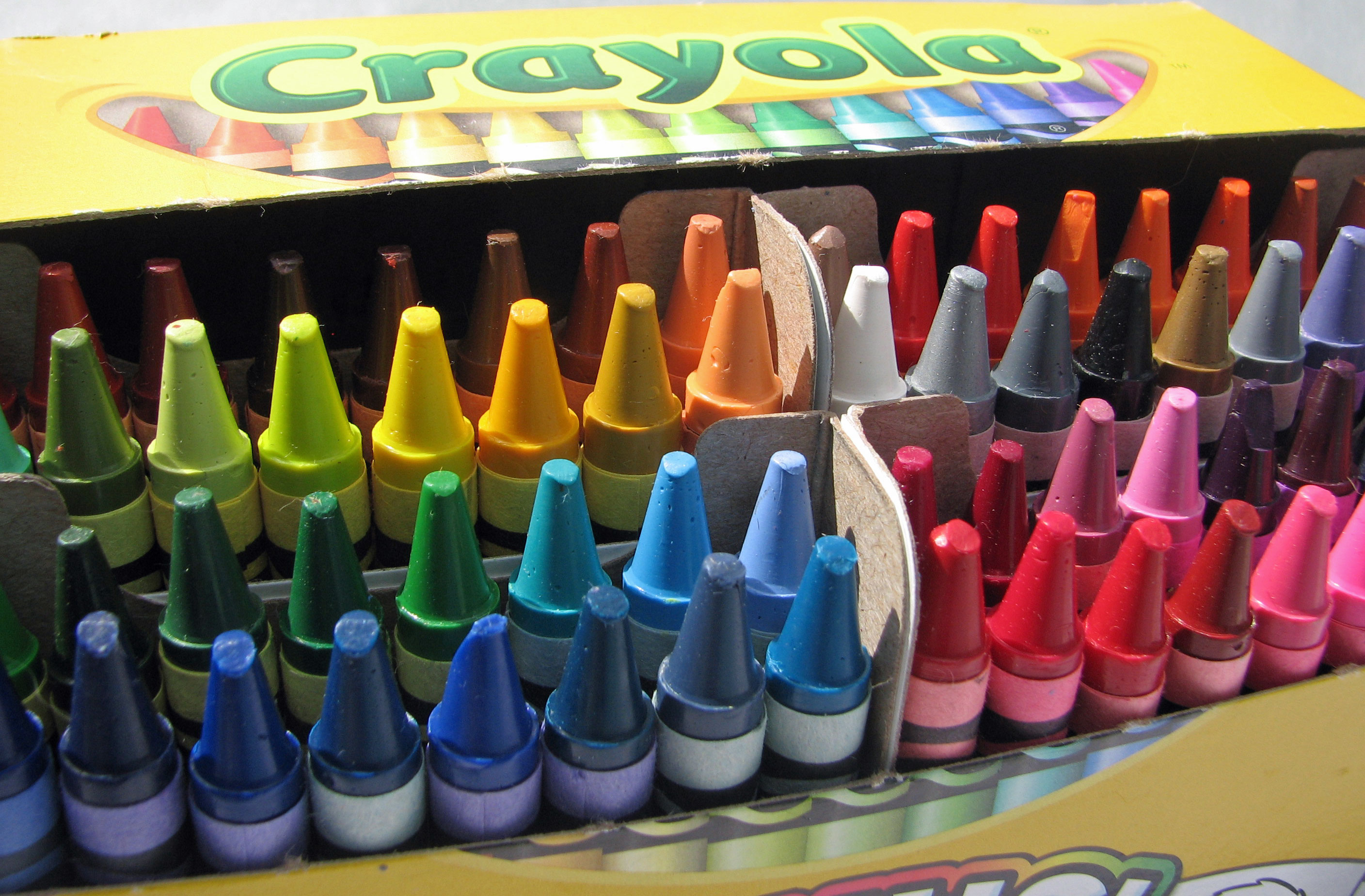
When I was in grade school, one of the best things of all about back to school time was receiving a brand new box of crayons. The big box. 64 colors. Ah, I get excited now thinking about it. All the colors. All the possibilities.

Look at all those colors!

And yes, these are my crayons, not my sons. 🙂

Well, I got that same thrill recently when I went to the Florida Tropical Weavers Guild Conference. Unfortunately, I didn’t go to teach or attend any of the workshops this year. The baby was too young to leave for too long. But, I did get to sneak away for an afternoon to see friends and shop, courteous of my wonderful inlaws, who were in town.

And just look at what I bought!

Eye candy!

Eye candy!

I know! Isn’t it pretty.I love looking at this yarn! Crayon nirvana all over again. But, this is even better. It’s like fiber crayons; the box of 64 with a sharpener.

The yarn is from Lunatic Fringe Yarns. They have brilliantly come up with a 10/2 perle cotton yarn color wheel called “The Tubular Spectrum”. Endless inkle color play for sure. I also had the pleasure of meeting Michele Belson, one of the owners.

Look at all those colors!

Look at all those colors! Oh, the projects that await.

I have used Lunatic Fringe yarn in many of my projects, so I am excited to have the full color spectrum. It was my intention to buy the colors I didn’t already have, but I decided to buy the whole kit because it was so much more cost effective.

Besides, one can never have too much yarn. Right?

warp, weave, be happy!

~Jennifer

A Tisket, A Tasket, Weave an Inkle Basket

Tags

, , , ,

I’ve always wanted to try basket making. Update: 8/29/18 I have tried basket weaving and now I have, oh my, it is a wonderful as I had imagined. They are beautiful and useful- the same as inkle bands. So, I got this crazy idea; why not weave a basket with inkle bands?! Inkle band basket tutorial final
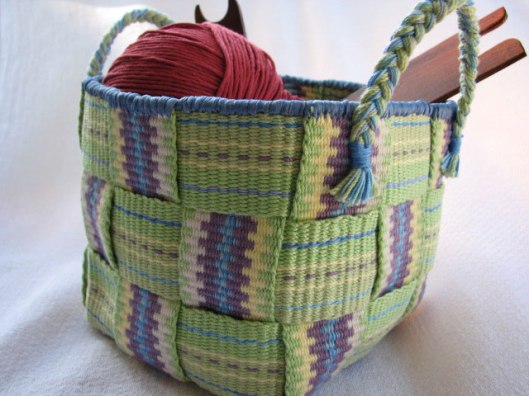
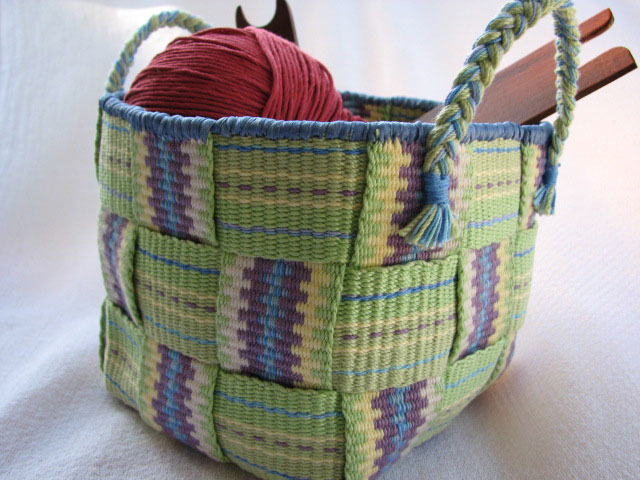
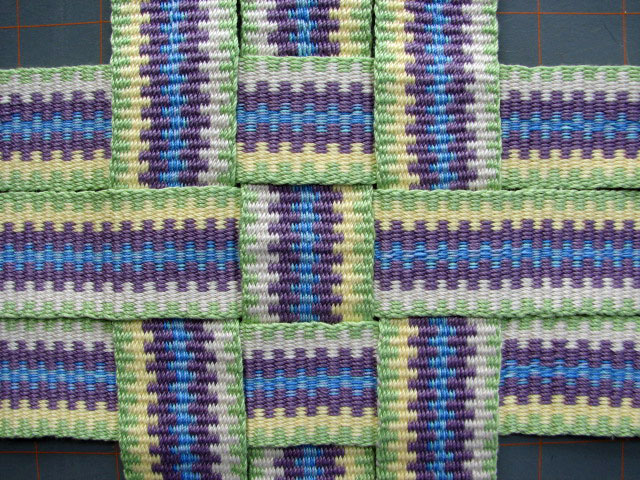
My inkle basket is created by cutting two inkle bands into strips and weaving them together in a simple over under pattern. For a little contrast, I used two different bands to make the basket , but it would look really nice made out of one pattern too. My band was 1 1/2″ wide and the final basket is 4 1/2″ L x 4 1/2″ W x 4 1/2″ H.

Supplies needed:
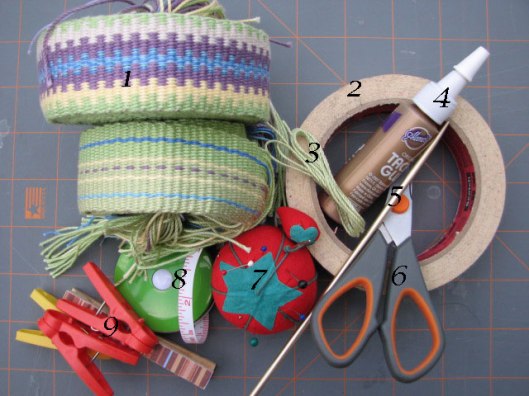
1. Inkle band(s) 2. masking tape 3. extra yarn, floss, or thread 4. all purpose glue 5. knitting needle (optional) 6. scissors 7. straight pins and embroidery needle 8. something to measure with 9. clothes pins

1. Inkle band(s) 2. masking tape 3. extra yarn and thread 4. all purpose glue 5. knitting needle (optional) 6. scissors 7. straight pins and embroidery needle 8. something to measure with 9. clothes pins (*not pictured: 1/8″ (3mm) wide coordinating satin ribbon and sewing thread)

Update: 8/29/18 Thanks to a fellow Inkle Weaver in the Inkle facebook group an error was found in my calculations below. I am ever grateful for the discovery! The update is in italics below.

We have to do a bit of math to determine the length of inkle band you will need.

Multiply width of inkle band by 3 = width of basket base
Multiply width of basket base by 3 = length of one *vertical inkle strip
Multiply length of one *vertical inkle strip by 6 = total length of band needed for *vertical strips of the basket

Then:

Multiply width of basket base by 4 = length of one *horizontal inkle strip
Multiply the width of the band by 2. Add to length of one horizontal inkle strip – this will allow for overlap of the woven strips)
Multiply length of one *horizontal inkle strip by 3= total length of band needed for *horizontal strips of the basket

*vertical and horizontal refer to the direction of the strips as they are woven to make the sides of the basket.

example: (for easy math imagine your band is 1 inch wide)
1″ x 3 = 3″ (Width of basket base)
3″ x 3 = 9″ (Length of one vertical strip)
9″ x 6 = 54″ (Total length of band needed for Vertical Strips: excluding fringe)
3″ x 4 = 12″ (Length of one horizontal strip)
2 x 1″ = 2″ (width of inkle band multiplied by 2)
12″ + 2″ = 14″ (Length of one horizontal strip plus width of band x2)
14″ x 3 = 42″ (Total length of band needed for Horizontal Strips of the basket

The example basket would measure 3″L x 3″W x 3″H.

Following the example above, with two bands, as I did, you would need one band at least 54″ for the vertical strips and one at least 42″ for the horizontal strips. If using only one band the two totals need to be added together. Your band would need to be at least 96″. These totals are excluding fringe. The width of the bands will determine the final dimensions of your basket.

So let’s get started!

You will need 6 vertical strips and 3 horizontal strips each cut to the lengths you calculated.

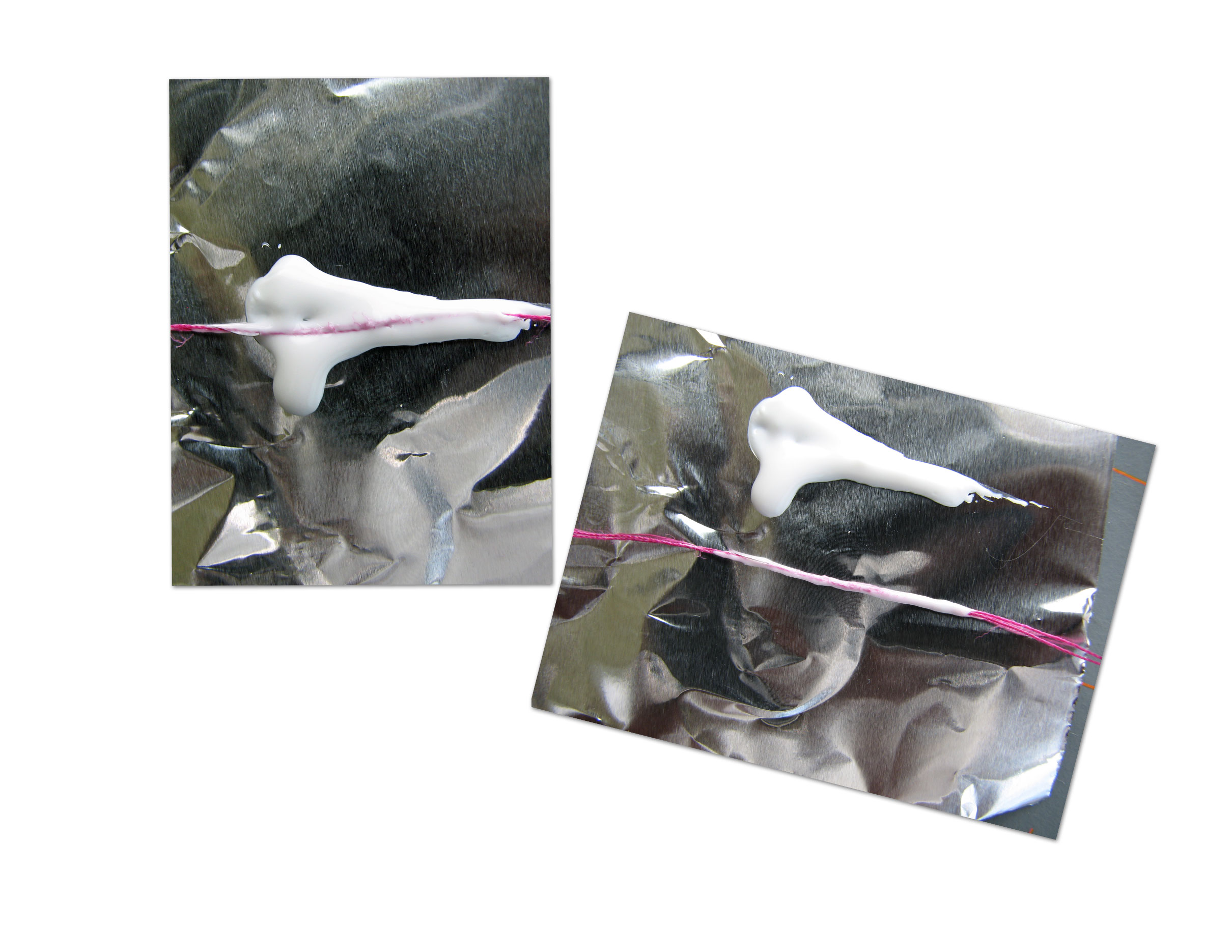
To prevent the ends from raveling, seal the ends. Thread a needle with sewing thread. Put a bit of glue on the end of the thread as wide as the band. I call this glue thread. Yes, I thought long and hard on that name.
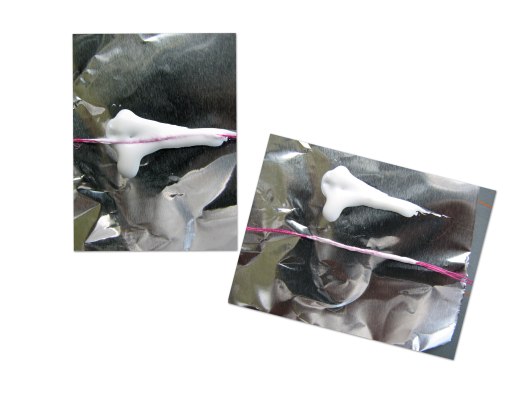
inkle band basket tutorial step 9.5.

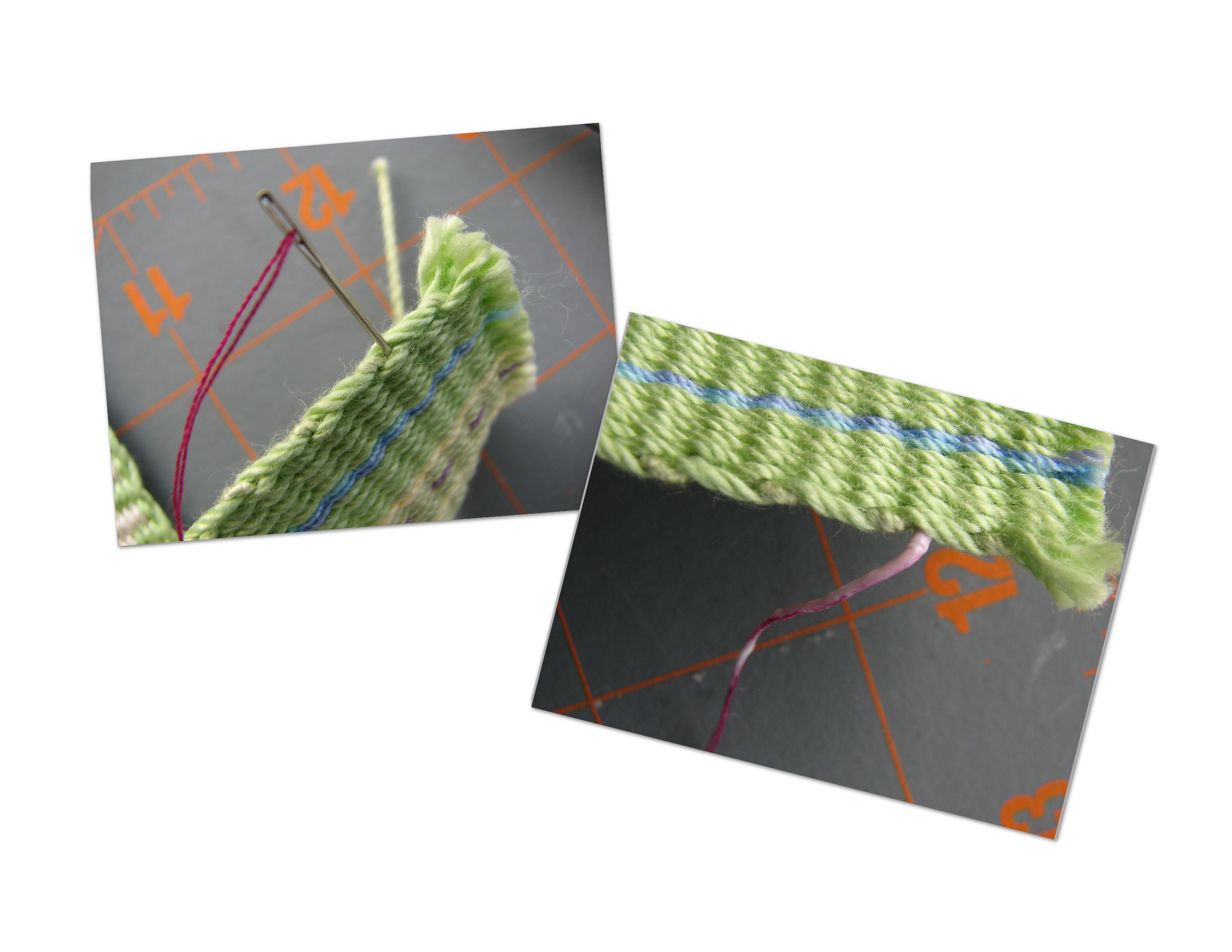
Insert the needle into the “tunnel” between the warp layers, one or two rows from the top edge. Pull the needle and thread all the way through until the glue thread is sandwiched in the band. Press firmly with your fingers to seal.
inkle band basket tutorial step 9

Trim the strip above the glue thread row. Apply glue along the top of the cut edge. Let the glue dry for at least 15 minutes. Your strips should be good and sealed now.
Inkle band basket tutorial step 9.2

Now we are ready to make a basket!

Begin with 4 vertical strips placed like this. Inkle band basket tutorial step 1
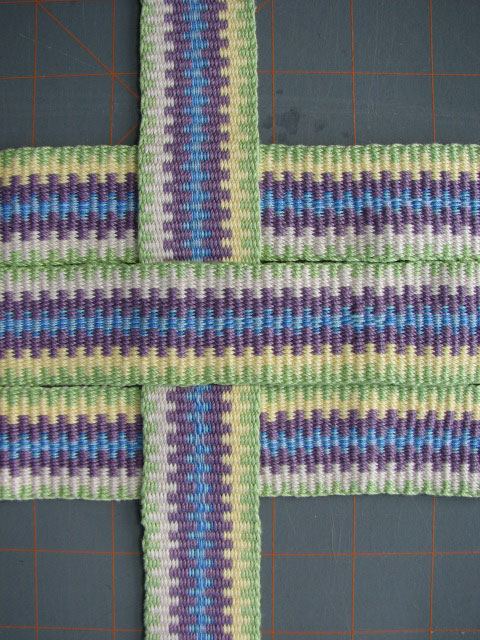
Then:
Inkle band basket tutorial step 2

And last strip placed; your base is built. The base square should be centered with the strips edges being evenly lined up on all four sides. Tip: Use a knitting needle to help nudge the strips into place.
Inkle band basket tutorial step 3

Use the masking tape or straight pins to secure the base so it doesn’t shift while you weave the walls.
Inkle band basket tutorial step 4

Begin building the walls by weaving a horizontal strip around the base strips.
Inkle band basket tutorial step 5 Inkle band basket project step 6

Add glue to the overlap of the horizontal strip inside the basket and weave the overlap behind the next vertical strip to hide it.
Inkle band basket project step 7

inkle band basket project step 8

Oops, the strips in this picture are not sealed…

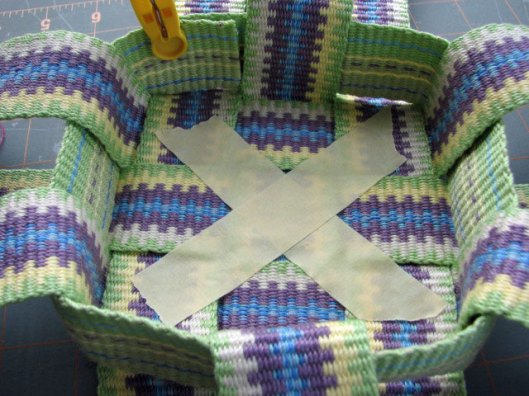
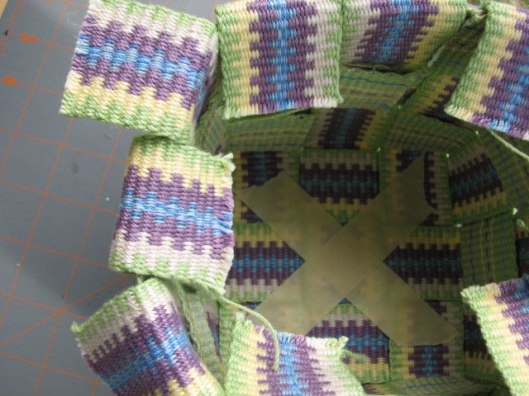
As you continue building the walls of the basket it might be helpful to fold the vertical strips over the horizontal strips to aid in keeping everything in place.

This is what it will look like when all of the sides are built.
Inkle band basket project step 10

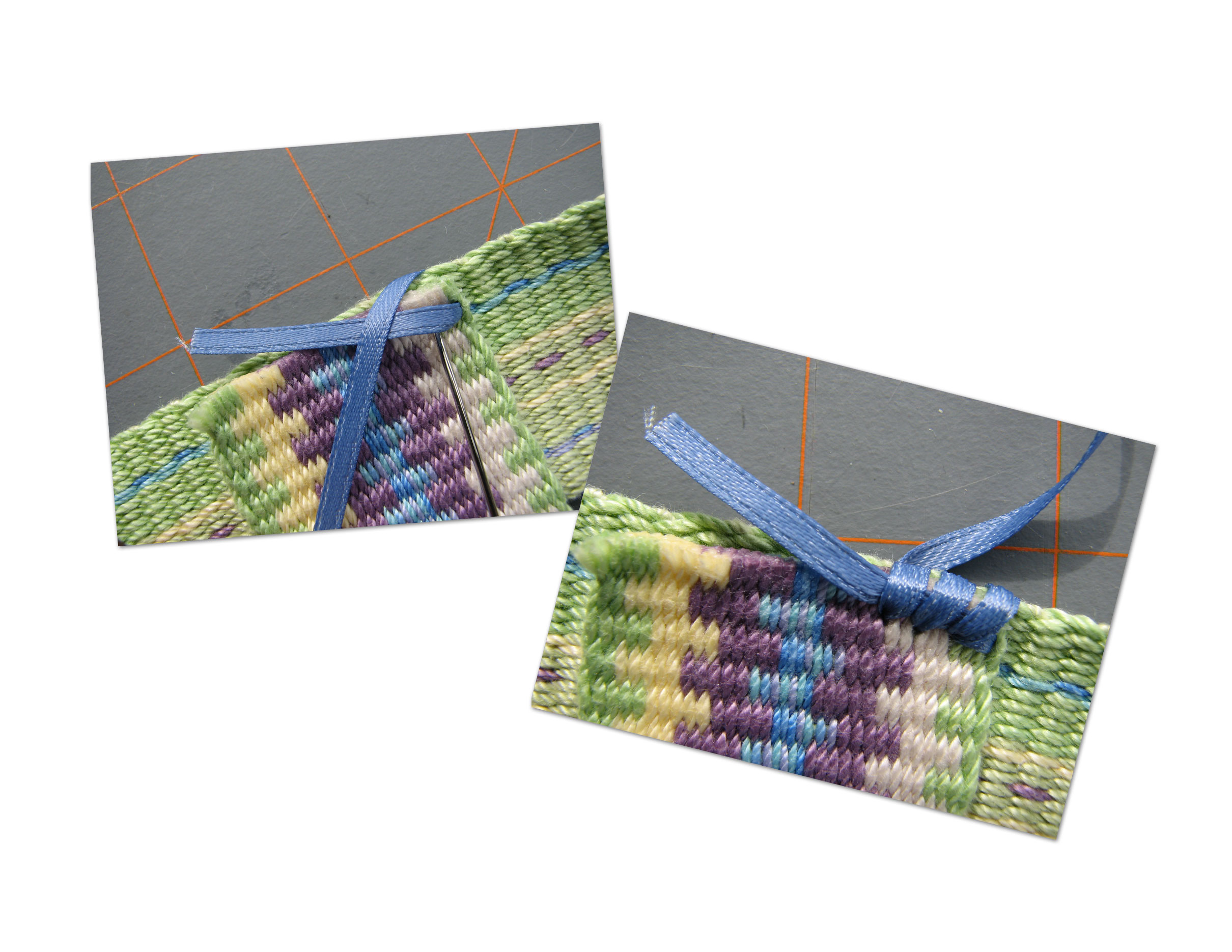
Whipstitch around the top edge with the embroidery needle and ribbon, securing the vertical strips to the horizontal strip. Be sure to insert the needle below the glue thread row.
Inkle band basket tutorial step 11.

Braid handles out of the fringe you cut off or lengths of yarn. Wrap the ends with yarn and sew to the basket.Inkle band basket embroidery edge

And ta-da, you have a woven inkle basket!
Inkle band basket tutorial final

My basket is filled with some fibery goodness that just arrived in the mail. Can’t wait to empty it and fill it again. What will you fill your basket with?

warp, weave, be happy! ~ Jennifer

Sample, Sample, Sample

Tags

, , , , ,

My weaving study group teacher is always saying SAMPLE, SAMPLE, SAMPLE. It makes complete sense to sample. Mistakes and discoveries about yarn type, color, etc. can be made before delving into the final project and save a lot of time and money.

How do you sample inkle weaving. Heck, compared to a floor loom warp inkle loom warps are sample size. Even though I’m planning a narrow band, only 19 warp ends, warped at the shortest length it still uses 19 yards of my limited quantity and expensive warp material. I’m sampling leather. $$$ You get the picture.

Here’s what I came up with:

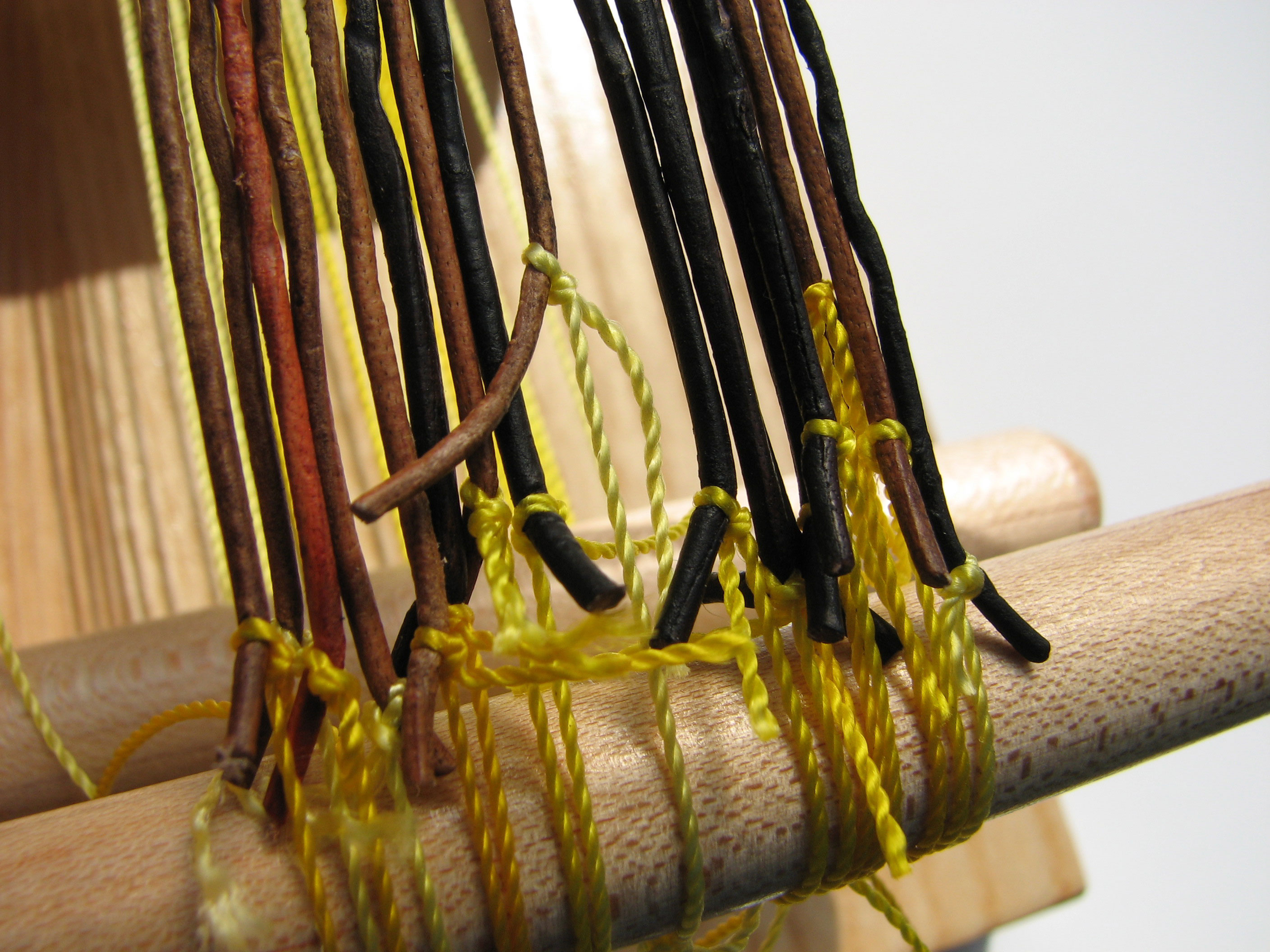
I cut 19 ten inch lengths of the leather. Then, I cut 19 pieces of an inexpensive nylon yarn (it was the first thing I grabbed) and tied each to one end of each leather piece. The nylon pieces were long enough to tie to the front peg of the loom. At the other end of the leather, I tied it to the nylon yarn without cutting it from the spool.

Nylon tied to both ends to make one long warp end.

Nylon tied to both ends to make one long warp end.

Then, I wound that warp end onto the loom, cutting it from the spool when I got back to the beginning; tying it off.

Warp ends individually tied to the front warp peg.

Warp ends individually tied to the front warp peg.

Top of warp ends tied to the nylon yarn.

Top of warp ends tied to the nylon yarn.

Top of leather/ nylon warp heddled and unheddled.

Top of leather/ nylon warp heddled and unheddled.

Side view of leather/ nylon warp threads.

Side view of leather/ nylon warp threads.

Usually, I don’t tie-off each warp thread individually, but it worked well here. I have woven and taken out three different weft materials so far. The leather has a memory, so the weaving leaves it a bit wavy. I’d hate to do that if it were a real warp.

I do have a lovely mini-loom that I use for sampling when the material isn’t so precious. I’m curious to know what other people do to sample inkle weaving.

warp, weave, be happy! ~ Jenifer

Do You Have Any Change?

Tags

, , ,

What do you give as a thank you gift to people for opening their home and welcoming you for a week and treating you like family. Simple. Give them something from the heart made with the hands. Inkle band change purse pick-up

Yup, I made change purses with the bands from my last post. I’ve actually wanted to do an inkle change purse since I first learned how to weave inkle. The original idea and inspiration came from a great tutorial on Curious Weaver. My purses ended up being slightly different than her lovely purse, however. I sewed my bands vertically to minimize the amount of cutting and joined them by hand to be able to hide the join stitches.Inkle band change purse joining 2 Inkle band change purse joining

I used a blanket stitch to close the side seams.Inkle band change purse blanket stitch seam

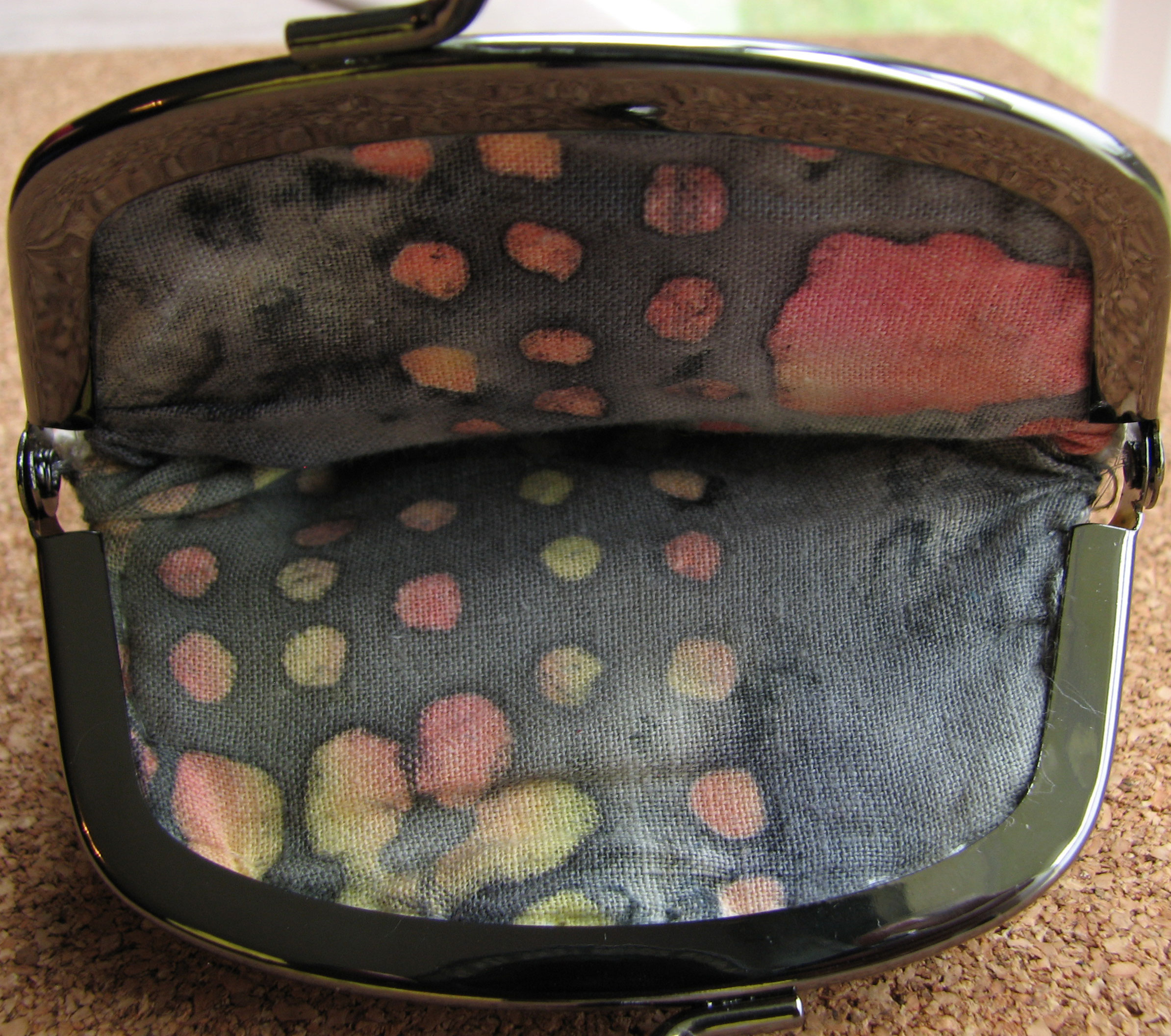
The purses are lined with cotton batik, which in hindsight I should have cut on the bias to allow for give inside the purse.

Inkle band change purse batik lining 2 Inkle band change purse batik lining

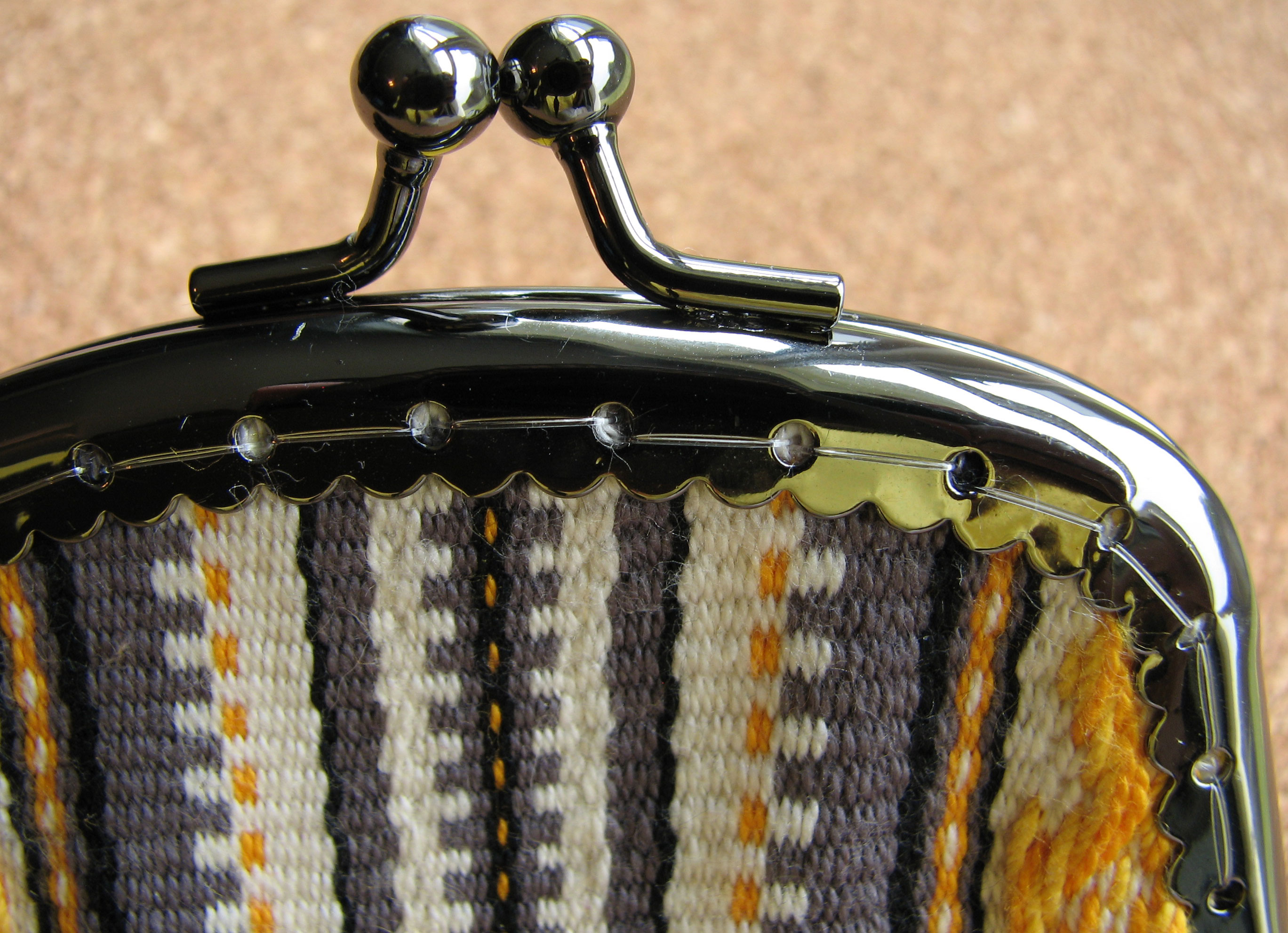
My assembly method more closely follows the tutorial from U-Handbag. Both tutorials miter the corners to give a flat bottom and use a glue-in frame. My purse frames are the sew-in type, stitched with nylon beading cord (think fishing line).

Inkle band change purse sew-in frame

The first purse ended up being a tricky little project at times. There were some lessons learned:
-Very fuzzy yarn is not good for inkle weaving. You WILL end up cutting it out.
-Darker, thicker, contrasting yarn is a good idea for doing pick-up weaving when you are sleepy- easier on the eyes.
-Once you get the rhythm of pick-up it goes faster than you think it will. It can take a while to get a rhythm.
-Measuring accurately prevents a lot of headaches.
-The trick to sew-in purse frames: the needle needs to be inserted at an angle.

Now that I know what the heck I’m doing, I’ll definitely be making one of these again for myself. The bottom of my pocketbook is always full of change that I can never seem to find when I’m ready to pay for something…

I have one more gift to make, which hopefully, I’ll be able to get to this week, between the diaper changes and feedings of one and the potty training of the other. Stay tuned.

warp, weave, be happy!

~Jennifer

1st Inkle Pick-up Band

Tags

, , , , ,

My first completed pick-up inkle band!
Anne Dixon Inkle Band Pick-up pg 75

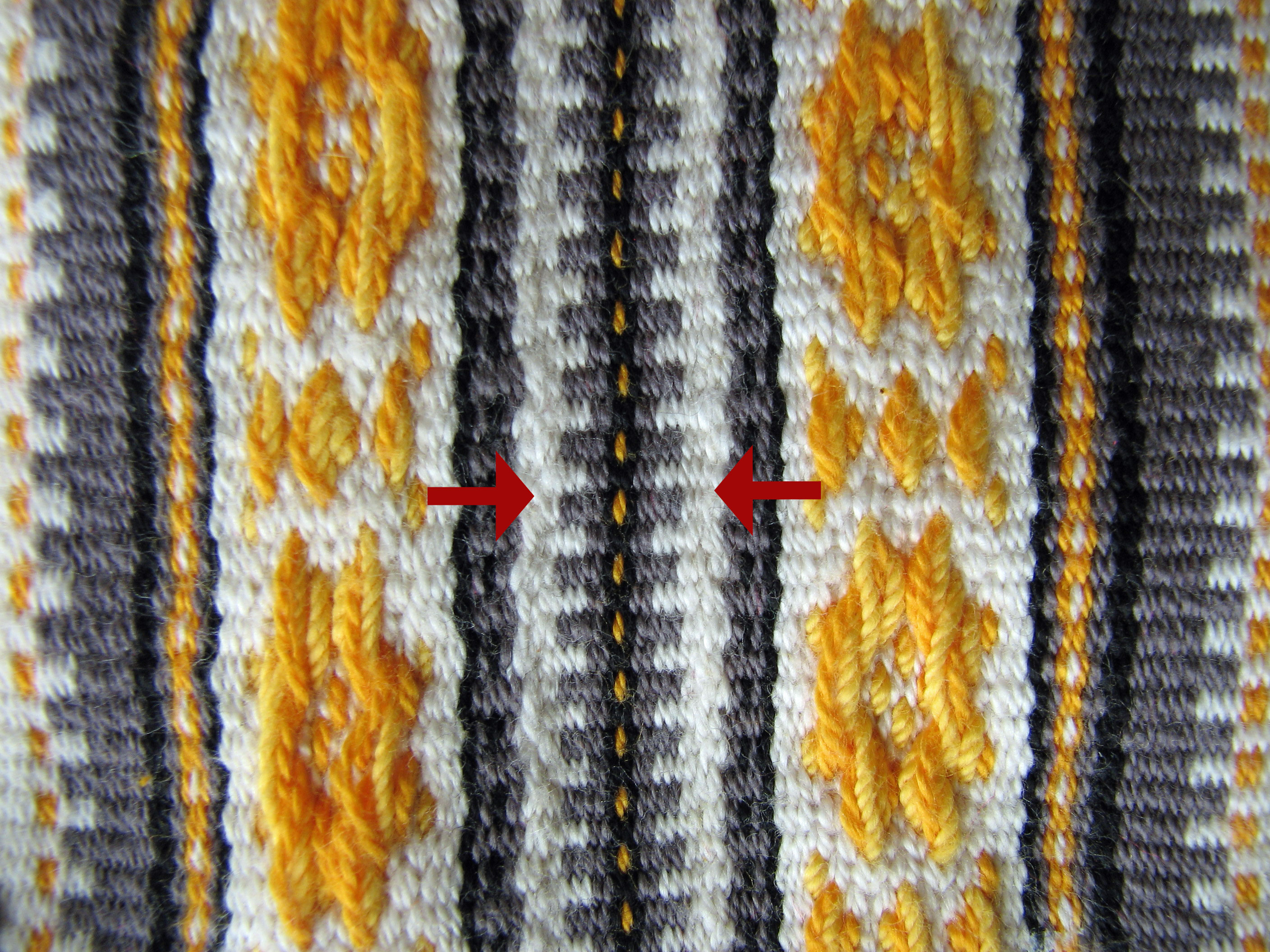
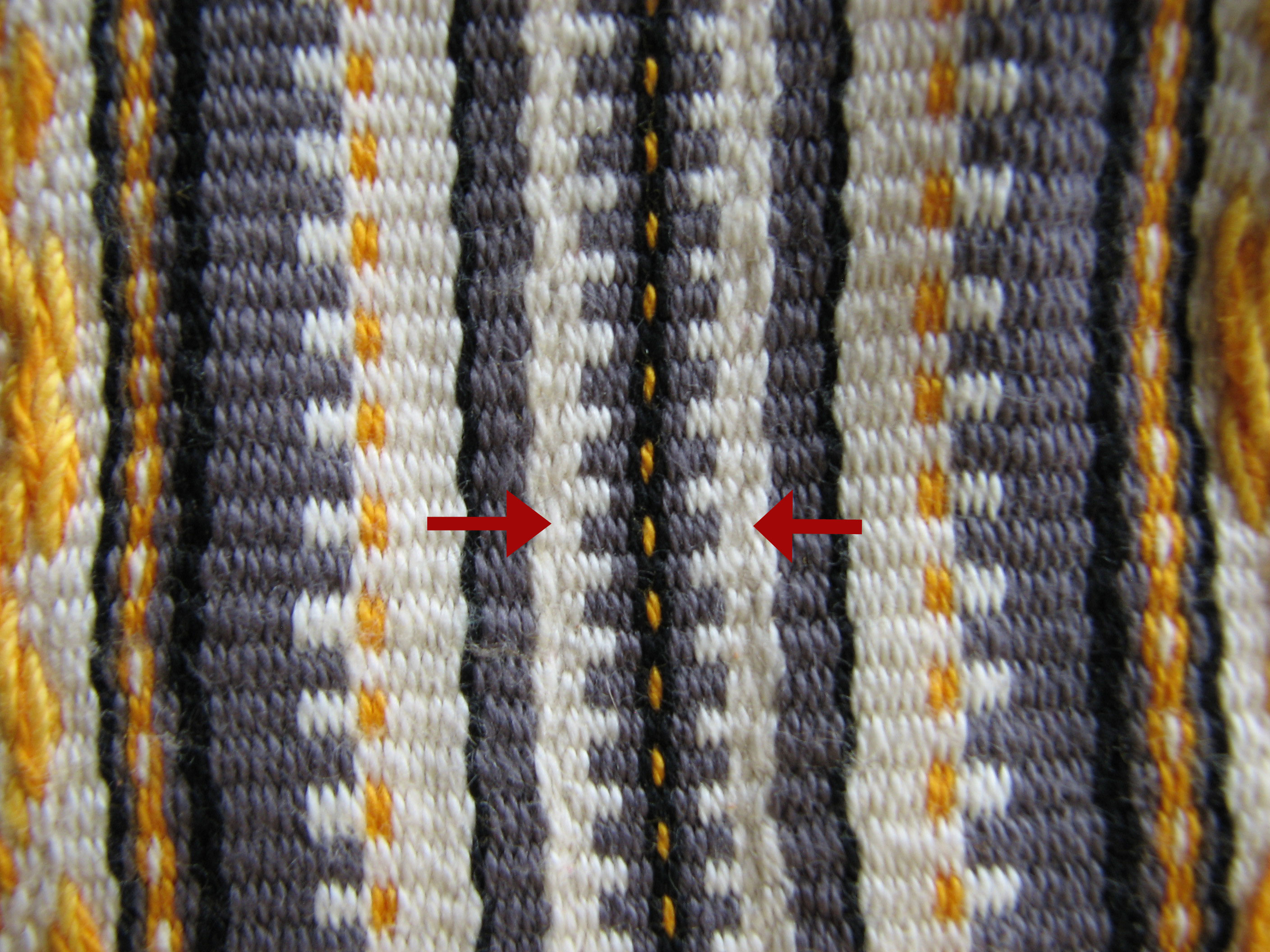
I did about as much “unweaving” with this band as I did weaving, but in the end I am really happy with the final result. The two pick-up patterns are Baltic-style pick-up on 13 warp ends from page 75 of Anne Dixon’s wonderful book The Weaver’s Inkle Pattern Directory 400 Warp-Faced Weaves.

Left: inkle band frontRight: inkle band back

(Pattern 1) Left: band front Right: band back

(Pattern 2) Left: band front Right:  band back

(Pattern 2) Left: band front Right: band back

Pattern 1

Pattern 1

Pattern 2

Pattern 2

Dropped pick-up warps to separate patterns.

Dropped pick-up warps to separate patterns.

Stay tuned for the cute project planned for this band…

warp, weave, be happy!
~Jennifer

The Warp Stops Here

Tags

, , , , ,

Does this ever happen to you?
You are weaving away on a wide inkle warp and it slips off a peg.Inkle-Warp-slipping-off-peg
I have this affliction which causes me to design inkle warps that end up wider than I intended resulting in warp slippage.

This very wide warp has 132 10/2 perle cotton warp ends.
Wide-inkle-warp

My solution? Rubber o-rings, also known as rubber jump rings.
Wide-inkle-warp-with-rubber

inkle-band-warp-with-rubber

full-inkle-warp-w.-rubber-o

The beauty of using rubber jump rings is that they are available in so many sizes and fun colors; plus they are fairly inexpensive. You can purchase them almost anywhere that sells jewelry making supplies. Or you can go to your local hardware store and get some rubber o-ring washers. I think they are in the plumbing section. Unfortunately, the ones at the hardware store only come in black, which is not nearly as fun!

warp, weave, be happy!

~Jennifer

An Inkle Bit of Love

Tags

, , , , , , , , , , ,

Updated 2/13/2021

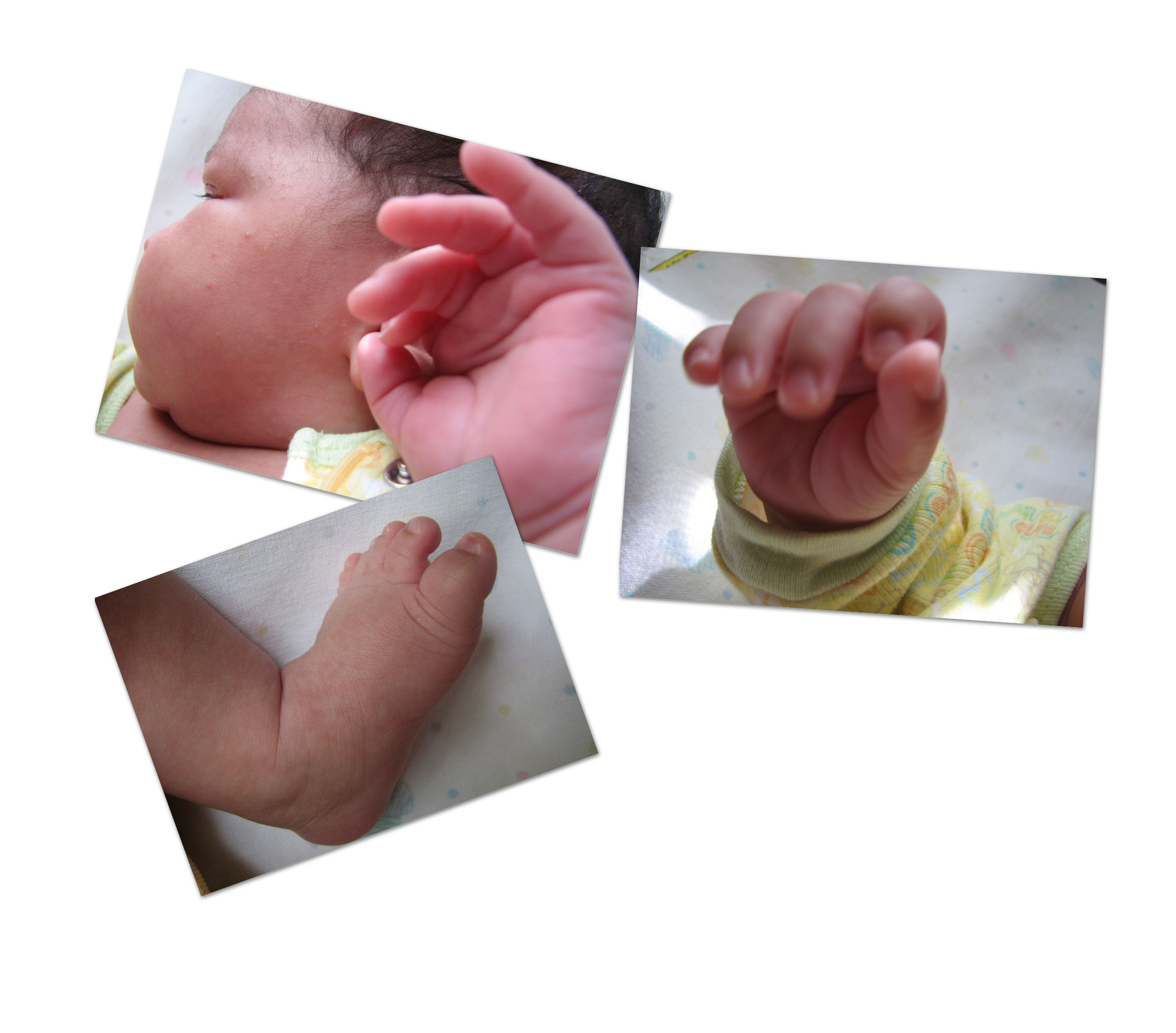
Happy the day before Valentine’s Day. I revisited this post today after Liz Gipson a.k.a the Yarnworker, shared the project on her facebook page of the same name. Thank you, Liz! I am so glad she did. I haven’t seen these little hands and fingers in so long. They are still cute, in my unbiased mommy opinion, just 8 years bigger. Time does fly. In revisiting the post I made a few updates. The update is in two parts, so be sure to keep scrolling to the part 2.

Happy Valentine’s Day! Today is the perfect day for my first post since June; the perfect day to share that the reason for the break is the new love in my life. Growing this new love has kept me from weaving and writing, but ultimately has brought me so much joy. I am happy to introduce you to my new love, our new son, who joined us on January 10th.

My new love!

Now that I’m not “growing”’ this love anymore, I feel more like myself and am so happy to be weaving, writing and creating again. Although, arguably, I was creating for 9 months… So, here is an “inkle bit of love” project for you. I hope you enjoy.

Supplies needed: Craft glue, scissors.

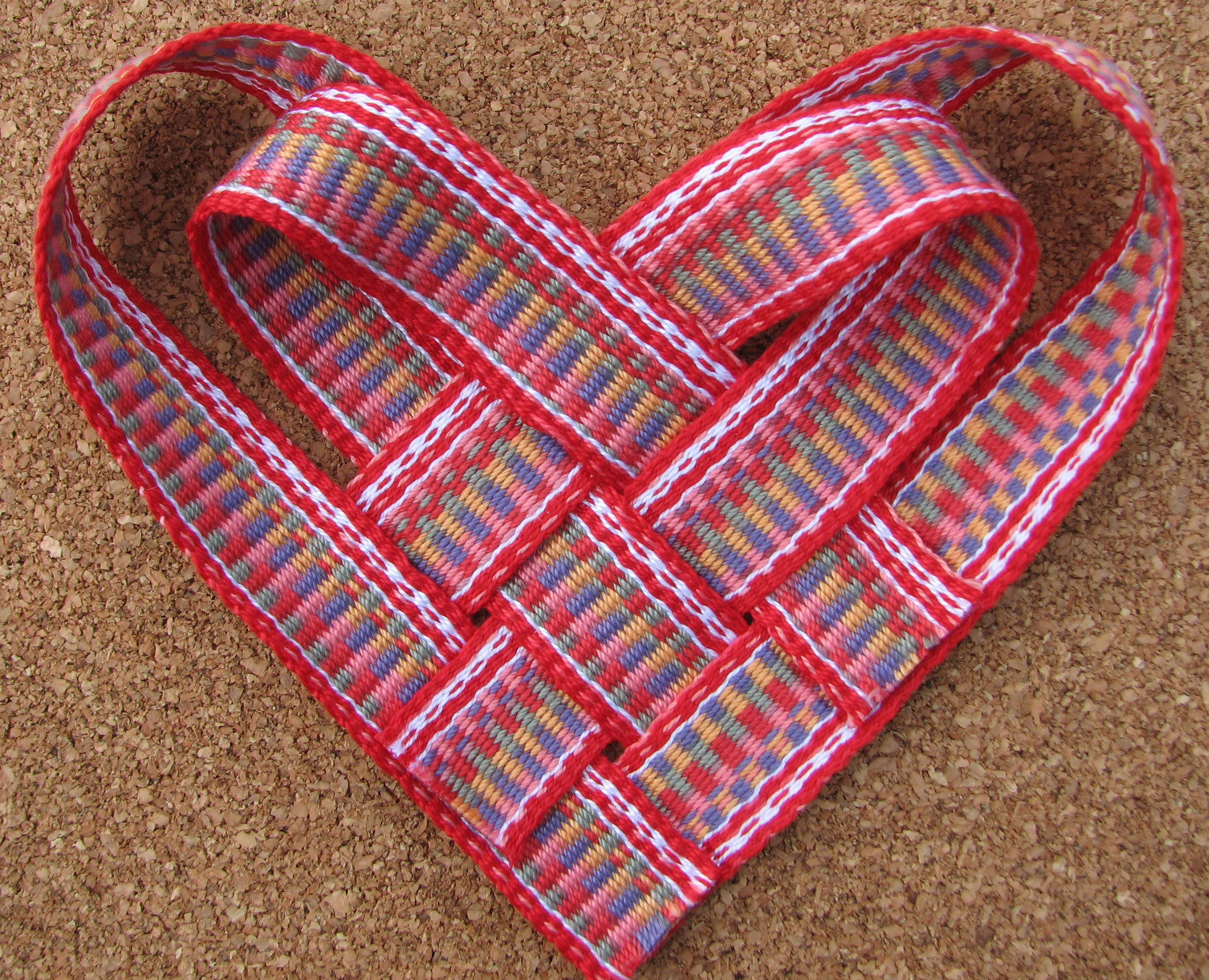
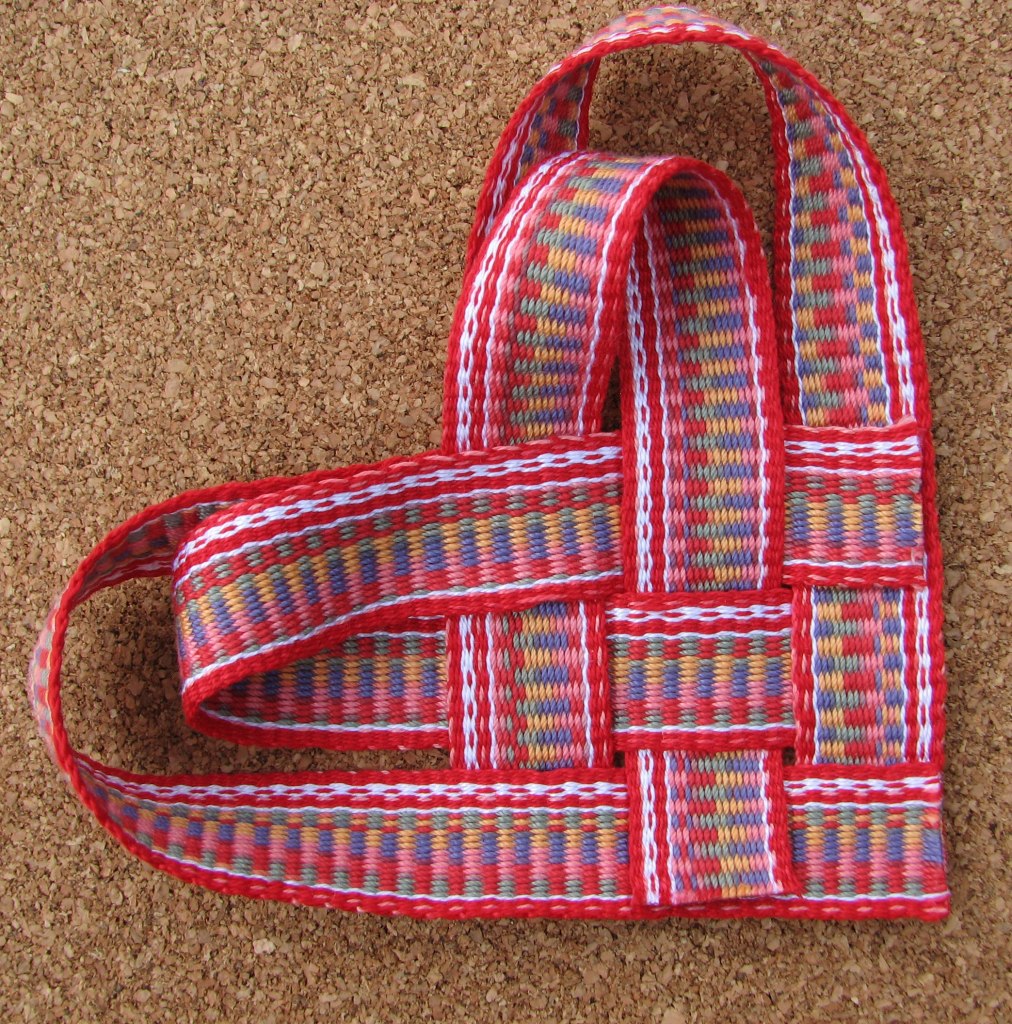
You will need a band no wider than 3/4″ cut into four 8″ long pieces, any wider and it just looks wonky. However, shorter pieces will give you a smaller heart and longer pieces will give you bigger heart. (and the world needs more of those!) Use the glue to seal the edges of each band piece so they don’t fray and to glue the band ends down after you’ve gotten them into place.

Updated (2/13/21)

The Steps:

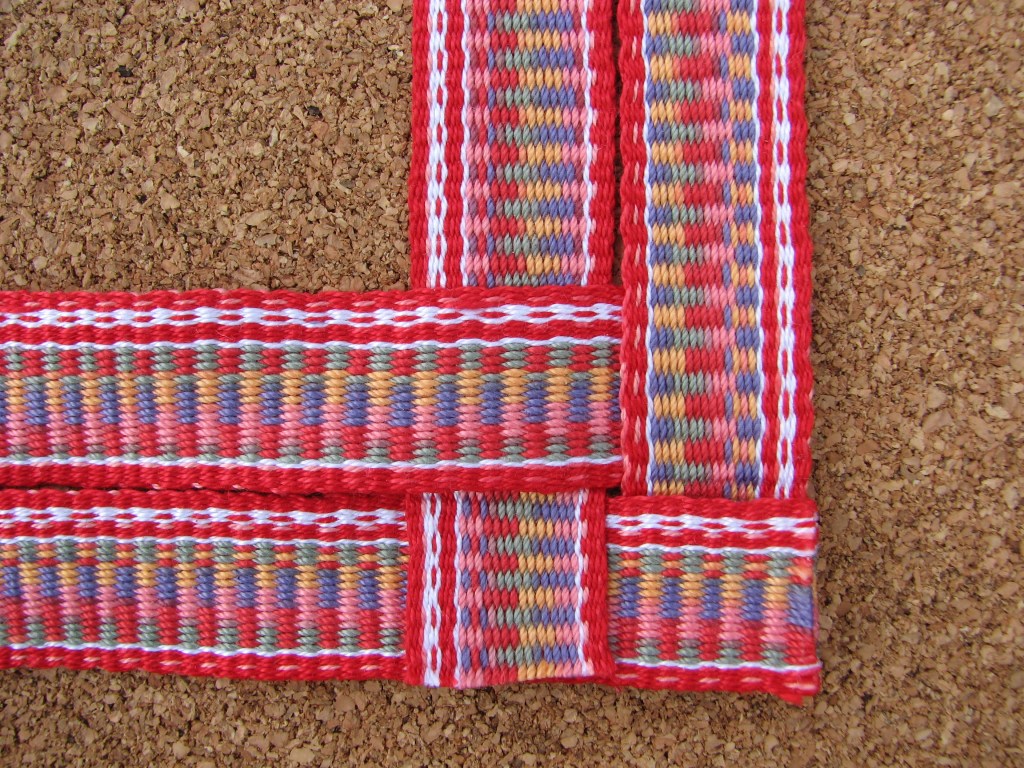
  1. Interlace four ends of your cut bands, lining up the cut edges with the selvedges.

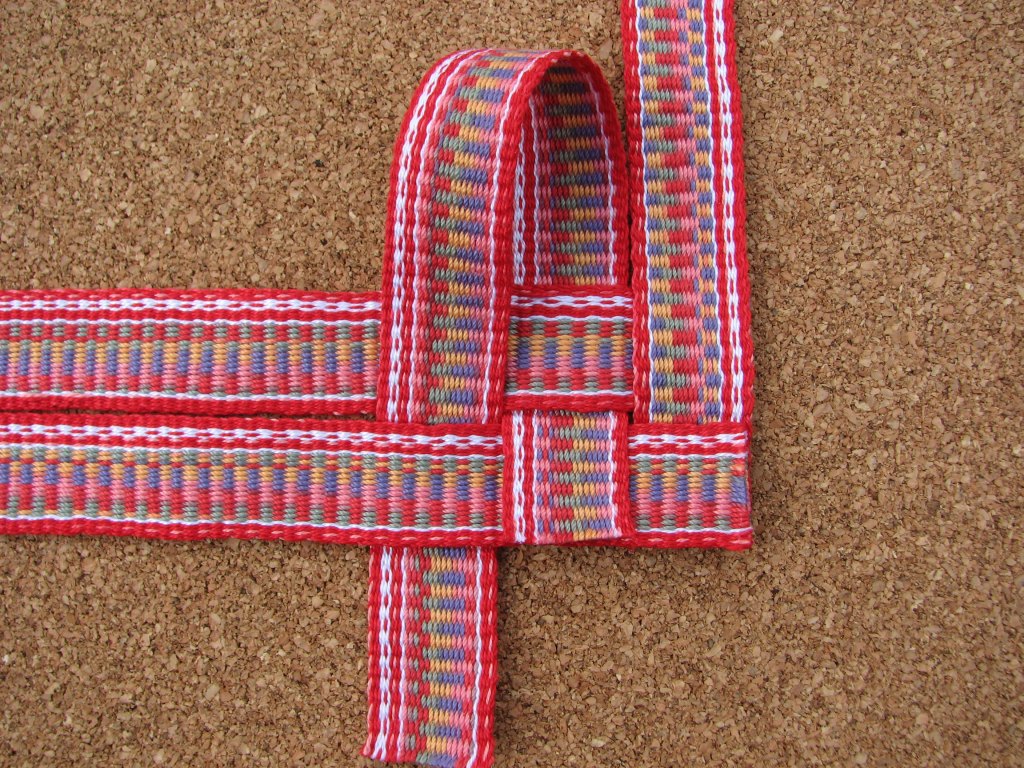
2. Fold the left vertical band over the top and under the bottom horizontal strips. Be sure not to twist when folding.

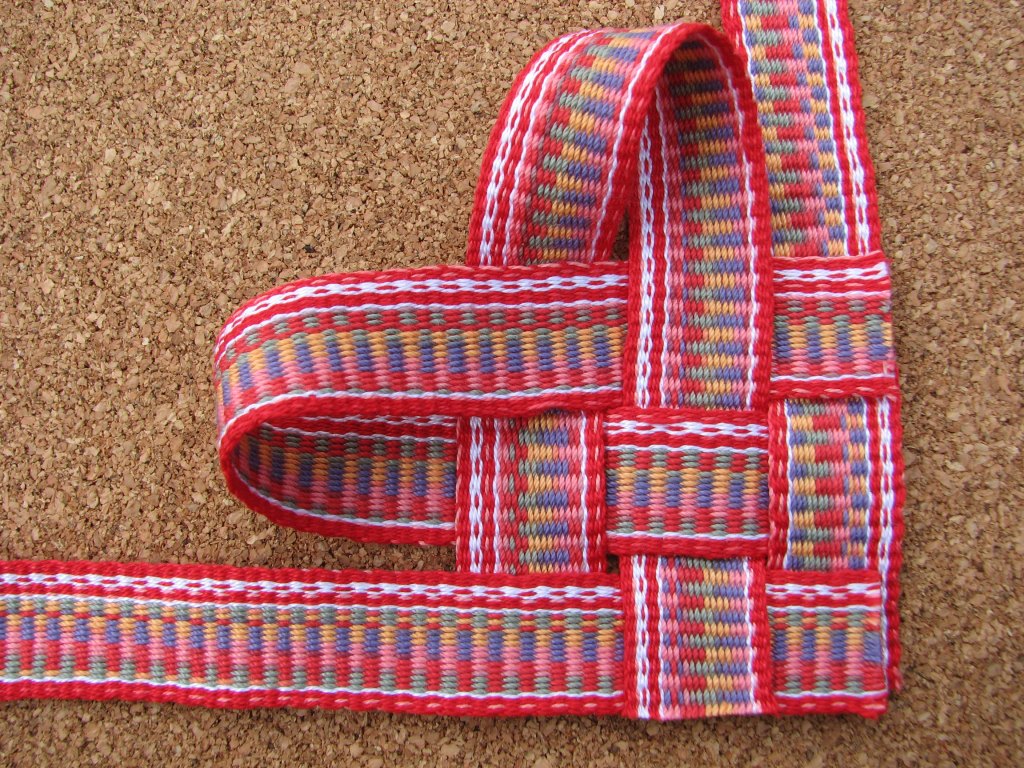
3. Fold the top horizontal band over, under, over the three vertical bands. Be sure not to twist when folding.

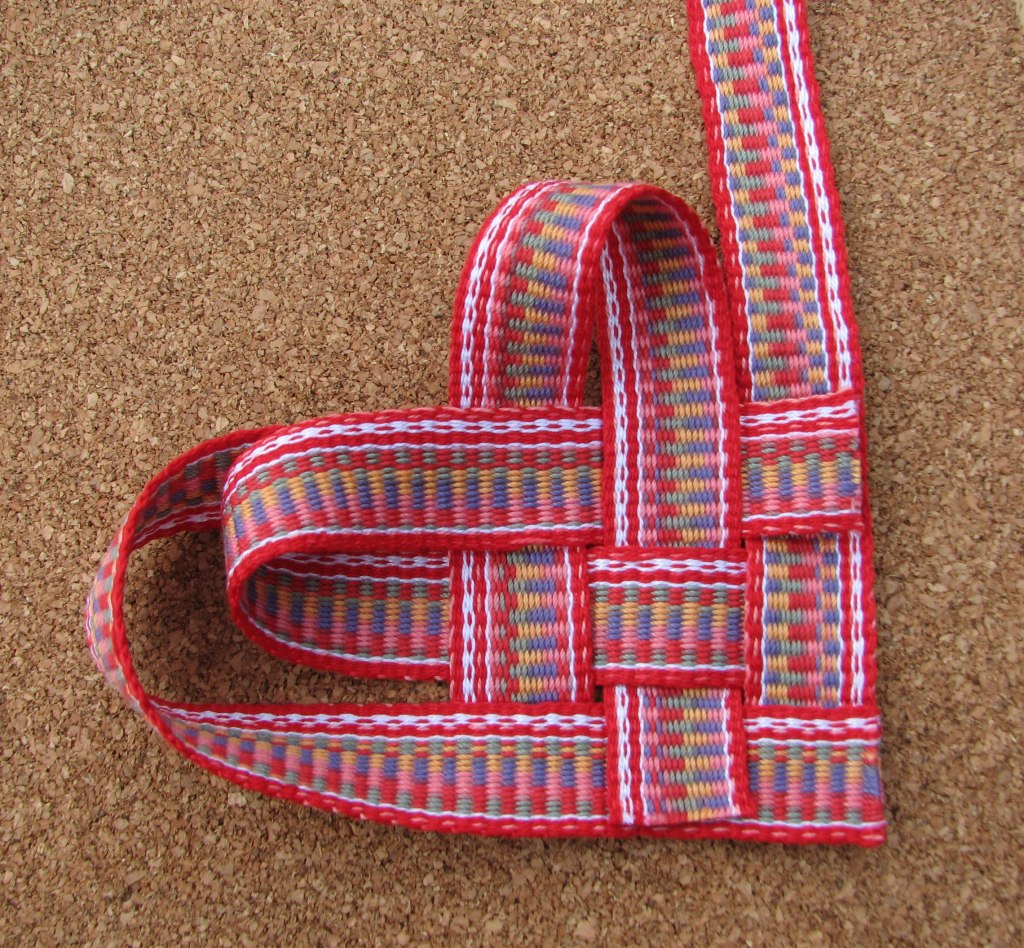
4. Fold the bottom horizontal band piece behind the center heart and glue in place. It is not woven in.

5. Repeat step 4 with the right vertical band.

Wouldn’t this heart be fun made into a lapel or scarf pin, a hair clip, a magnet… What else? Do you have any ideas?

Update part 2 (2/13/21):

Looking back on this post gave me the urge to make a pin. In my bin of bands that have no purpose but were fun to weave, I found a thinner 1/2″ band, in Valentine’s Day worthy colors. The heart is smaller than the original , about 3 1/2″ wide by 2 1/2″ tall.

The main difference from the original heart and this one, besides being smaller, is I bent the two outer bands back instead of over and back. The smaller size just seemed to call for it.

Then, I sewed a pin to a piece of felt cut to fit the back of the heart and glued the felt to the heart.

Et voila, a Valentine’s Day heart pin.

This was a fun update.

Warp, weave, be happy! ~ Jennifer
Inkle: Read all About it!

Tags

, , , ,

I sat on the floor with 25+ years of Handwoven Magazine at my finger tips. Stacked in neat tantalizing piles they were waiting for me to attack.Stack of Handwoven Magazine

A few weeks ago a fellow guild member sent out an email bragging she was destashing her Handwoven Magazine collection dating back to 1985 (well, not really bragging, but since I don’t destash I am always jealous of people who do). My heart fluttered, I only learned about the magazine 4 years ago when I became a weaver. Just imagine what inkle weaving treasures could be in those pages. She had EVERY issue. I had to go take a look.

Now, how to find the inkle weaving articles in over 100 issues without taking so long to search that I would have to move into her house. Hmmm! I needed a game plan.

Guess what? Interweave Press, publisher of Handwoven, has indexed every issue since 1979 by subject and author!

Handwoven Magazine Inkle IndexYeah, I know, No way! What an awesome resource!

I went to the index, searched the word inkle, printed the index pages that matched my criteria (6 in all) and headed to her house.

My game plan: with the specific issues and pages I was interested in highlighted, I’d be in and out. Took a little longer than that, but after 2 ½ hours I was a happy girl. I still can’t believe I only walked out with 6 magazines. But my “plan” allowed me to be eagle eye focused.

Since I’m so into inkle band projects, I was hoping to find cool ideas and inspiration; more than belts and bookmarks. While those were there I did find some great goodies. Including a doll I can’t wait to try! How unique and cute are these?!

Inkle Band dolls

“Inkle Band Babies” by Christi Eales Ehler, Handwoven Magazine Nov/Dec 2003 p. 60

Thank you Handwoven Magazine so much for saving me from having to move! This index might just be one of the greatest online weaving resources around. I’m hoping to make some of the fun Handwoven Magazine projects in the near future, let’s hope my son keeps taking long naps!

warp, weave, be happy! ~Jennifer
Inkle Patterns on the Wall

Tags

, , , , ,

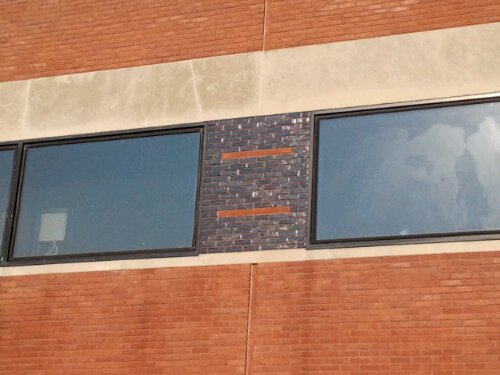
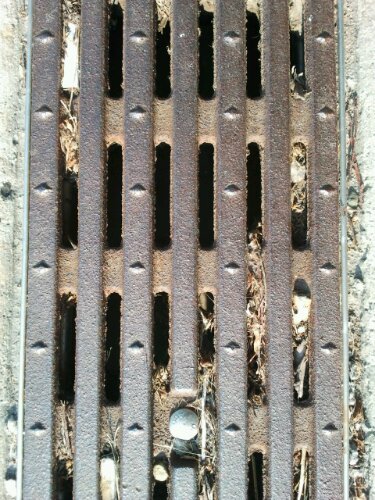
On travel, without my inkle loom, what am I to do?
Take pictures of architectural structures and details that make me think of inkle band designs, of course.
image
image
image
image
Syracuse University is an institution of great inkle inspiration!

Where do you find your pattern inspiration?

warp, weave, be happy! ~Jennifer
“Painted” Yarn

Tags

, , , , , , , ,

What’s so faux about this painted yarn?

I didn’t use paint! Nope. What did I use?

Permanent markers!

On a recent episode of The Martha Stewart Show she made a “tie-dye” t-shirt with a technique using Sharpie Markers and rubbing alcohol (see it here). My creativity lightbulb went off! “Can I do that on yarn?” The answer is YES!

I have Bic brand permanent markers instead of Sharpie, but they worked just fine. When I finished the yarn, the colors I chose looked so good together. Then I realized I used a Bic Color Collection set of markers. They were made to go together! There was no way I could mess up the color combinations.

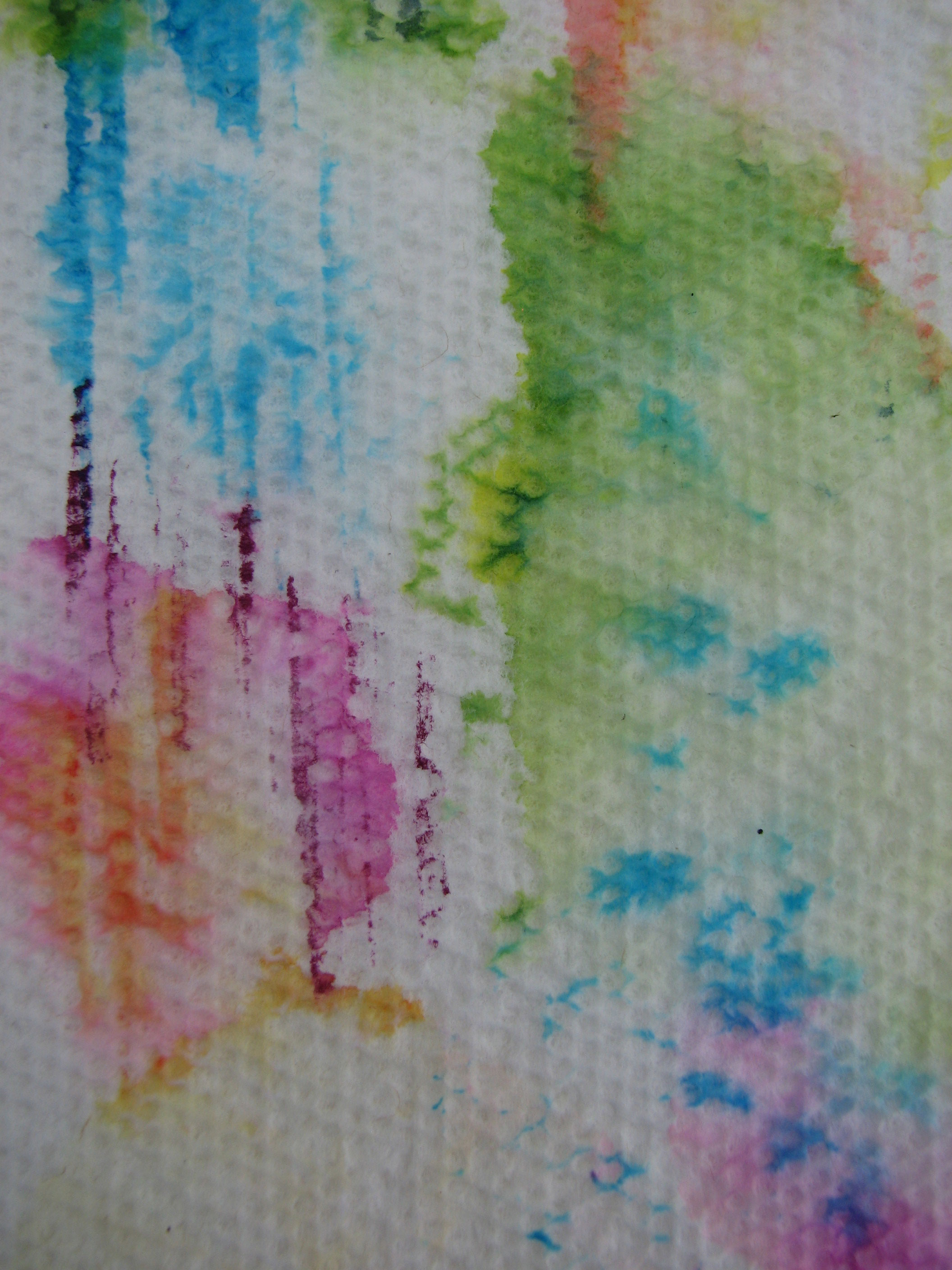
So, following Martha’s directions, with slight variations, I made my first “painted” warp.

Wrap a piece of cardboard parchment paper. I wrapped one of my 2 year old’s books like a present (it was the perfect size and no harm came to it!), waxy side out. I did also slip a piece of paper towel under the yarn, to absorb any excess color. Heaven for bid, Eric Carle’s “From Head to Toe” be ruined! Doesn’t the paper towel look pretty too?

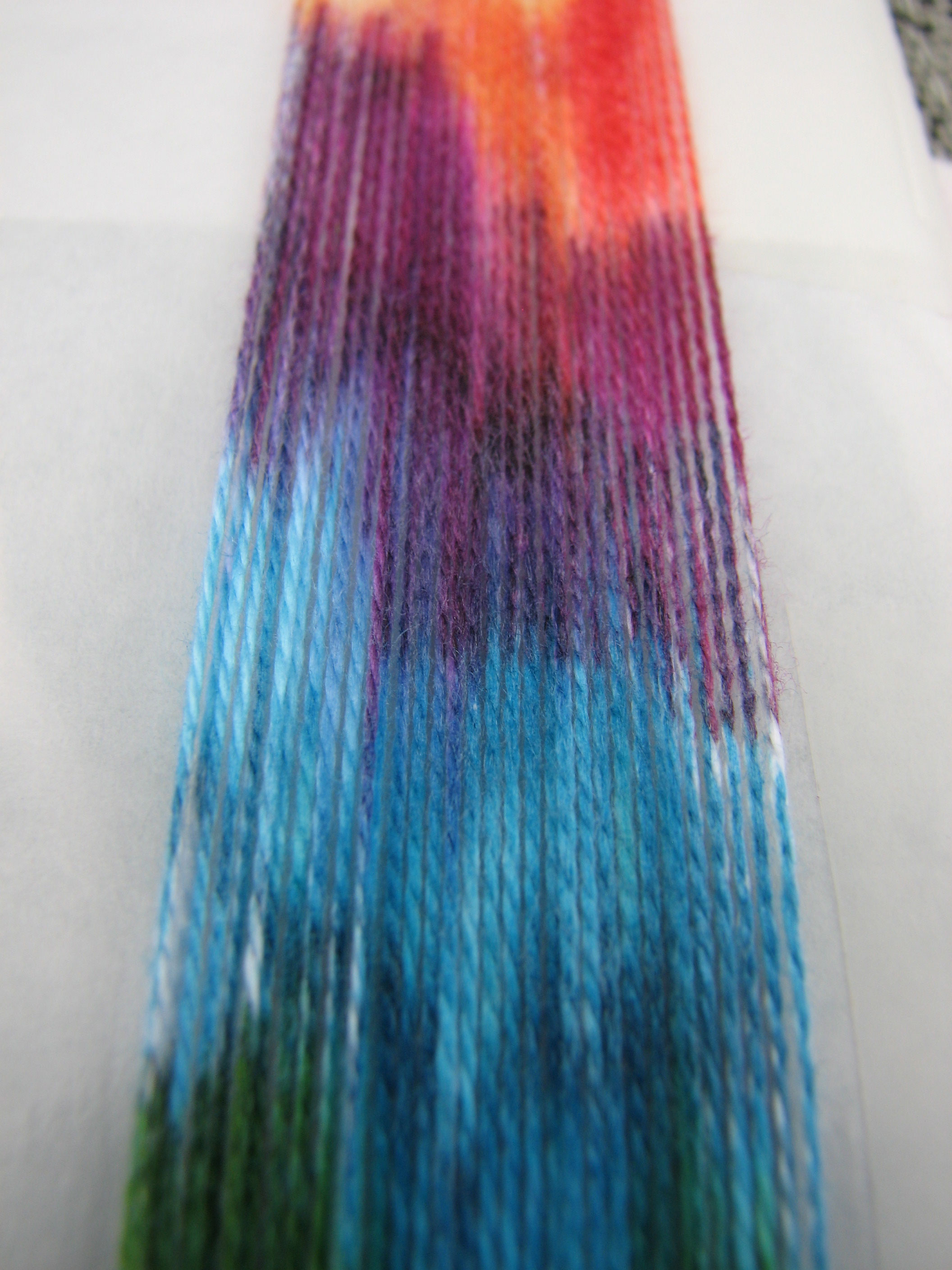
Wrap white 10/2 perle cotton around the covered book as many time as necessary to get the length of yarn you want. I wrapped about 35 times.

Start coloring! Color in 1″ – 2″ sections with slight gaps of white showing between each color. Stop after every few colors and add a few drops of alcohol at the edges of the colors. I found the colors blended better when the ink was still wet. Tip: I didn’t have an eyedropper, but a cotton swab dipped in the alcohol and dabbed on the yarn worked just fine.

Unwrap the yarn and let it dry after you’ve finished having fun coloring, and it is will be fun. (Your fingers might get a little stained at this part.)

Put the yarn in a small bowl filled with white vinegar to set the color. Let it sit for about 10 minutes, rinse, put it in a small bowl with clean water (no soap) and let it sit for 10 more minutes, rinse. (You may want to repeat the rinsing process until the water in the bowl is clear. Although, I did not because I was too impatient to see the end results.)

Remove the excess water by rolling the yarn in paper towel.

Heat set it. I threw my yarn in the dryer in a lingere bag, but you could use an iron on a work surface that you don’t mind getting a little ink on, like an old towel or sheet.

Once it was heat set, I only noticed a small amount of color on my fingers, but I think that is because I used red. You know how red is! And, I only rinsed it in water once.

So there you have it; a faux “painted warp”. It will be fun to weave something with it! What do you think? If you give it a try, please do let me know how it turns out.

warp, weave, be happy! ~Jennifer